

Content note: This article discusses child sexual abuse in general terms. It contains no graphic detail. Support resources are listed near the end.
You may have come across “MDSA” in a social media post, a support forum, or a survivor’s video and wondered what the letters mean. Or you may have found the term because something in your own childhood has never sat right, and you are looking for words.
MDSA stands for mother-daughter sexual abuse. It describes sexual abuse of a girl by her mother or by a woman acting as her mother. It is a form of child sexual abuse, and it is real, harmful, and far less discussed than abuse by men.
This guide explains what the term means, why this kind of abuse so often goes unrecognized, how it affects survivors, what existing research says, and where to find help. It is written for survivors, for people who support them, and for anyone who wants an honest, plain-language answer.
What Does MDSA Stand For?
The Definition, in Plain Terms
MDSA means mother-daughter sexual abuse: sexual abuse of a daughter by her mother or a mother figure.
The “mother figure” part matters. Research on this topic has included survivors abused by biological mothers, and also by stepmothers and grandmothers who held a mothering role. What defines MDSA is the relationship: an adult woman with caregiving authority over a girl, using that position for sexual purposes.
Survivors and researchers describe a wide range of behavior under this umbrella. Some of it involves direct sexual contact. Some does not, and includes sexualized comments about a child’s body, exposing a child to adult sexual material, or treating a daughter as a partner instead of a child. Abuse also tends to travel with emotional abuse and a blurring of the line between parent and child, often called enmeshment.
Two points clear up most confusion:
- Abuse is defined by the adult’s behavior and the power imbalance, not by whether the child understood it at the time.
- A child cannot consent to sexual contact with an adult. Ever.
Is MDSA a Clinical or Research Term?
Not exactly. “MDSA” is shorthand that grew up in survivor communities, especially online. You will not find it as a diagnosis in a medical manual.
The subject itself, though, has been studied. Academic work uses phrases such as mother-daughter incest, maternal sexual abuse, and female-perpetrated sexual abuse. A 2008 qualitative study in the journal Violence Against Women interviewed eight survivors across 29 interviews. A 2022 paper in Children and Youth Services Review analyzed 82 public posts from a survivor forum and described MDSA as a highly stigmatized and misunderstood form of child sexual abuse.
So the abbreviation is informal, but the experience it names is documented. If you tell a therapist “I think I experienced maternal sexual abuse,” they will understand you, even if they have never heard “MDSA.”
Why Mother-Daughter Sexual Abuse Is So Hard to Recognize
Most people, including most professionals, were taught a single picture of sexual abuse: a male offender and a young victim. Anything outside that picture can slip past notice. That is a big reason MDSA stays hidden, sometimes for decades.
The Myth of the “Naturally Safe” Mother
Cultures around the world treat mothers as nurturers by default. A woman who bathes a child, shares a bed, or handles a child’s body is assumed to be doing it out of care. Few people question it.
That assumption protects children when mothers are safe, which most are. It harms children when a mother is not. If the people around a girl cannot imagine a mother as a source of sexual harm, they will not look for warning signs, and the girl learns that nobody will believe her.
Older professional literature reflected the same blind spot. A guide for helping professionals on mother-daughter incest notes that mother-child incest was long considered virtually nonexistent, because most of the sexual abuse literature focused on male offenders. Part of the silence around MDSA is simply that, for a long time, it was not studied.
How Abuse Hides Inside Caregiving
Parents have to touch their children. Babies need diaper changes. Toddlers need baths. Sick children need to be examined. Because physical care is built into the role, a mother who crosses a line can do so under cover of ordinary routines, and a child may have no reference point for what is normal.
This is not a reason to fear everyday parenting. The vast majority of caregiving is exactly what it appears to be. The difference lies in whose needs are being served and whether the child’s comfort and growing independence are respected.
Signs that care has become something else tend to share certain features:
- The contact serves the adult’s wishes, not the child’s needs.
- The child shows discomfort, and the adult ignores it or punishes it.
- Secrecy is attached to it, whether spoken or implied.
- It continues past the age when a child would normally manage that task alone.
- The adult turns to the child for emotional or physical comfort that belongs in adult relationships.
At a Glance: Caregiving vs. Boundary Violations
This table is a general orientation, not a checklist for diagnosing a specific family. If something described here sounds familiar, a trauma-informed professional can help you sort it out.
| Area | Healthy caregiving | Boundary violation |
|---|---|---|
| Purpose | Meets the child’s need (hygiene, health, comfort) | Meets the adult’s wishes or gratification |
| Child’s voice | Child’s “no” or discomfort is respected | Child’s discomfort is dismissed or punished |
| Privacy | Privacy grows as the child grows | Privacy is denied or invaded without reason |
| Talk about the body | Matter-of-fact, age-appropriate | Sexualized, mocking, or shaming |
| Secrecy | Nothing needs hiding | Child is told or made to feel it must stay secret |
| Roles | Parent is the adult, child is the child | Child is used as a confidant, partner, or source of comfort |
Why Survivors Often Don’t Recognize It Right Away
Many survivors say the same thing: “I didn’t know it was abuse until I was an adult.” That is not a failure of intelligence or awareness. It is a predictable result of how children understand the world.
Normalization and Delayed Understanding
Children build their sense of normal from what happens at home. If a behavior is routine, they assume other families do the same. Without a comparison, there is nothing to flag it as wrong.
Several things can delay understanding even further:
- No vocabulary. A child who has never heard that a mother can abuse a daughter has no category for it.
- Confusing messages. Abuse may be mixed with affection, gifts, or praise, so it does not feel purely harmful.
- Dependence. A child who needs her mother to survive has a strong reason not to see her as dangerous.
- Dissociation. Some children cope by mentally stepping away from what is happening, which can leave memories fragmented or hard to place.
Understanding often arrives later, triggered by a health class, a friend’s story, becoming a parent, starting therapy, or reading a survivor’s account online. Some people describe it as a slow dawning. Others describe it as a sudden collapse of a story they had carried for years. Both are common.
Loyalty, Love, and Confusion Can Coexist
A daughter can love her mother and be harmed by her at the same time. She can miss her, defend her, fear her, and grieve her, all in one afternoon. These feelings do not cancel each other out.
Researchers who study this form of abuse have described how survivors often struggle to reconcile the image of a mother as a victim or a caring figure with the reality of what she did. Some survivors remember a mother who was herself ill, frightened, or hurt, and that memory makes it hard to name the abuse. Understanding why a person behaved a certain way does not make the behavior acceptable, and it does not erase the harm to the child.
If you feel torn, you are not being disloyal or dramatic. Mixed feelings are one of the most consistent things survivors report.
The Emotional and Psychological Impact of MDSA
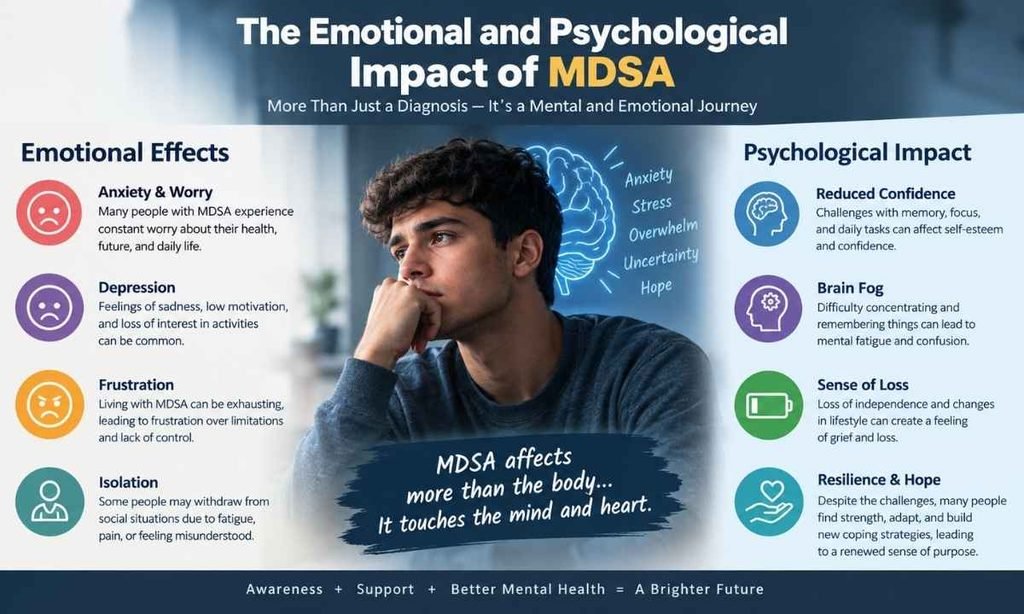
Abuse by a mother strikes at the first and most basic relationship a person has. For many survivors, that is where the deepest damage lies.
Common Effects Survivors Describe
Every survivor is different, and no list fits everyone. Still, these themes come up repeatedly in survivor accounts and in the research:
- Shame and self-blame. Survivors often carry a deep sense that something about them caused or deserved what happened.
- Difficulty trusting. If the person meant to protect you was the source of harm, trusting others can feel dangerous.
- Trouble with closeness and intimacy. Physical affection, sex, and emotional dependence may feel threatening or confusing.
- Anxiety, depression, and trauma symptoms. These can include flashbacks, nightmares, hypervigilance, and emotional numbness.
- A strained sense of identity. Some survivors say they feel uneasy about their own bodies or about becoming mothers themselves.
- Complicated grief. Survivors may mourn the mother they needed and never had, even while she is still alive.
In a small study of women who were abused by mother figures and later became parents, participants expressed ambivalence about motherhood, and some feared not knowing how to tell caring touch from harmful touch. That fear is understandable, and it is also a sign of how much these women wanted to do right by their own children.
None of this means survivors are broken. Many build full, loving lives. But the effects are real, and they deserve to be taken seriously.
What Research Says
The honest summary is that the research is limited, and most of it is small and qualitative. That means it relies on interviews and personal accounts rather than large statistical surveys. It cannot tell us how common MDSA is. What it can do is describe what survivors report. Here is what a few key studies found:
| Study | What it looked at | Main takeaway |
|---|---|---|
| Violence Against Women (2008) | 8 survivors, 29 interviews | The impact is profound, and survivors often meet disbelief |
| A 1990s survey of 93 adult women | Nature, dynamics, and effects of abuse by mothers | Harm fit established patterns: traumatic sexualization, betrayal, powerlessness, and stigma |
| Children and Youth Services Review (2022) | 82 posts from an online survivor forum | Shame, disgust, confusion, strained adult relationships with mothers, and hesitancy to tell others |
The four patterns in the middle row come from psychologist David Finkelhor’s well-known framework for how child sexual abuse causes harm, and researchers have found it fits abuse by mothers too.
Two limits are worth stating. First, people who post on forums or volunteer for studies are not a random sample, so findings may not describe everyone. Second, the 2022 authors themselves called for more work on how to support survivors with interventions designed for them. If a professional tells you the evidence base is thin, they are right, and it is not a reason to doubt your experience.
Barriers to Disclosure and Being Believed
Most survivors of any kind of child sexual abuse wait a long time to tell someone. With MDSA, the obstacles are stacked higher.
Fear of Disbelief
The fear is based on experience. The 2008 study found that survivors’ accounts of maternal violence were often met with disbelief. When a listener’s mental image of an abuser is a man, a story about a mother can sound impossible to them, and the survivor can feel the doubt in the room.
A survivor who has been doubted once may not try again. That is why a calm, believing first response matters so much. If someone tells you about this, you do not need to ask for proof or probe for detail. Saying “I believe you, and I’m glad you told me” is enough to begin.
Stigma and Isolation
The 2022 study found that survivors hesitated to tell friends, family, and helping professionals because they feared being misunderstood or judged. Several overlapping pressures sit behind that hesitation:
- Taboo. Society rarely speaks about women as perpetrators, so there is little public language to borrow.
- Family dynamics. Speaking up may mean losing the rest of the family, or being cast as the one who “caused trouble.”
- Fear of being misread. Some survivors worry that others will misunderstand their sexuality, their body, or their reactions.
- Few places to turn. Many abuse resources were built around male offenders, and survivors of MDSA can feel they do not fit.
The result is isolation. Many survivors find their first real community online, among people who describe similar experiences. Those spaces can be a lifeline, though they work best alongside professional support, which is covered below.
Is MDSA Only About Daughters?
The term MDSA names the mother-daughter pairing, but the broader problem is wider than that.
Female-perpetrated sexual abuse can affect boys as well as girls. Mothers can abuse sons. Other women, such as relatives, babysitters, teachers, or family friends, can abuse children of any gender. A 1990s survey of women abused by their mothers even included a smaller appendix survey of nine men who experienced maternal abuse, showing that researchers recognized the issue early, albeit on a small scale.
Boys and men who experienced this often face their own version of disbelief. Cultural messages often portray an older woman’s attention as a gift or suggest that boys should not feel bothered by it. These messages are wrong. When a woman abuses a boy, she commits abuse, and the boy deserves the same support as any other victim.
A mother is not the only parent who can abuse a child, and abuse can also come from non-biological parents. Families can include stepparents, grandparents, and other guardians. What stays constant is the pattern: an adult in a position of trust uses a child for sexual purposes.
If you are searching for the meaning of MDSA because of your own experience with a different relationship, the information here about recognition, impact, and healing still applies.
You Are Not Alone: Finding Support and Healing
Healing from this kind of abuse is possible. It usually does not happen quickly or in a straight line, and it rarely happens alone.
Talking to a Trauma-Informed Therapist
A trauma-informed therapist understands how abuse affects the nervous system, relationships, and self-image, and works at a pace that does not push you past what feels safe. When you look for one, consider these steps:
- Ask about experience. It is fair to ask whether they have worked with survivors of childhood sexual abuse, including abuse by women.
- Say what you need. You can tell a therapist at the start that you want to go slowly, or that you are not ready to give details.
- Watch how they respond. A good fit believes you, does not minimize, and does not suggest you owe your mother forgiveness or contact.
- Know that fit matters. If the first therapist is not right, trying another is not failure.
Approaches commonly used for trauma include trauma-focused cognitive behavioral therapy, EMDR, and relational or attachment-focused therapy. Which one helps most depends on the person, and a clinician can explain the options.
One caution: because MDSA is under-researched, you may meet a therapist who is unfamiliar with it. That is not necessarily disqualifying. Willingness to listen and learn counts for a lot. You can also share the research named in this article.
Support Communities and Advocacy Groups
Hearing from people who have lived through something similar can break the sense that you are the only one. Options include:
- Moderated online forums for survivors of maternal abuse, where rules protect members from graphic content and judgment
- Survivor-led groups run by sexual abuse organizations, either in person or by video
- Books and academic writing by survivors and clinicians on mother-daughter incest, which can supply language when you have none
Use your own judgment about pacing. Reading many survivors’ stories at once can be heavy. It is fine to step back, and it is fine to come back later.
If You or Someone You Know Is in Crisis
If a child is in immediate danger, contact your local emergency number right away.
In the United States:
- Childhelp National Child Abuse Hotline: 1-800-422-4453, for anyone worried about a child or for survivors seeking guidance
- RAINN National Sexual Assault Hotline: 1-800-656-4673, free and confidential support from trained staff
- 988 Suicide & Crisis Lifeline: call or text 988 if you are thinking about harming yourself
Outside the United States, findahelpline.com lists crisis and support lines by country. Laws on reporting child abuse also differ from place to place, so a local child protection service or sexual violence organization can explain what applies where you live.
If you are supporting someone who has just told you, focus on three tasks: listen without interrogating, tell them it is not their fault, and help them reach professional support at their own pace. You do not need to have the right words. Staying calm and present does most of the work.
Frequently Asked Questions
What does MDSA stand for?
MDSA stands for mother-daughter sexual abuse, meaning sexual abuse of a girl by her mother or a mother figure.
Is MDSA considered child sexual abuse?
Yes. When it happens to a minor, it is child sexual abuse and a form of incest, and researchers study it under that heading.
Why is the MDSA meaning not more widely known?
Most public awareness focuses on male offenders, and mothers are widely assumed to be safe, so this abuse has been under-studied and under-discussed. The term itself grew mainly in online survivor communities.
Can it take years to recognize this as abuse?
Yes. Many survivors only understand what happened in adulthood, because children treat their home life as normal and often lack words for what they experienced.
Does therapy actually help survivors of MDSA?
Trauma-informed therapy helps many survivors of childhood sexual abuse, though research specific to MDSA is still limited. A therapist who believes you and works at your pace is the key ingredient.
Conclusion
MDSA, or mother-daughter sexual abuse, is sexual abuse of a girl by her mother or a mother figure. It has been documented in research for decades, yet it remains one of the least discussed forms of child sexual abuse. That silence is not evidence that it is rare. It reflects a world that finds the topic hard to look at.
If you are a survivor, the confusion, the delayed understanding, and the mix of love and pain you feel are common reactions, not signs that something is wrong with you. What happened was not your fault, and wanting answers is a reasonable response to it.