
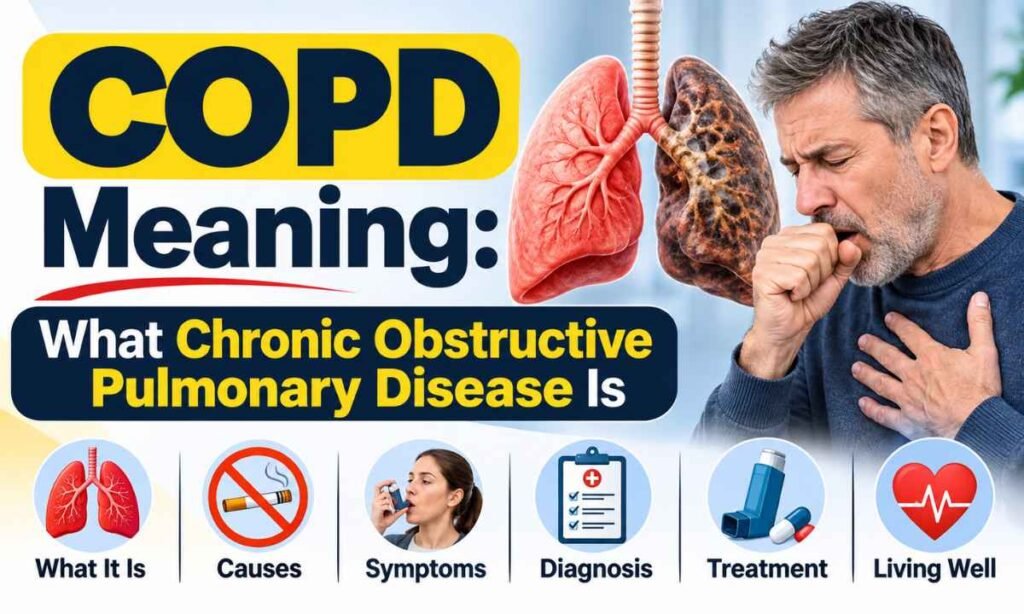

If you have just seen “COPD” on a medical report, or heard a doctor say it about someone you love, the abbreviation can feel heavier than the three letters suggest. It is a common diagnosis, and it is far better understood today than it was a generation ago.
This guide explains the COPD meaning in plain language, how the disease damages the lungs, what symptoms to watch for, how doctors confirm it, and what treatment can realistically do. It draws on the 2026 report from the Global Initiative for Chronic Obstructive Lung Disease (GOLD), World Health Organization data, and the patient resources of major hospital systems.
What Does COPD Stand For?
COPD stands for chronic obstructive pulmonary disease. It is a long-term, progressive lung condition in which damaged airways and air sacs make it hard to move air out of the lungs, causing breathlessness, cough and mucus.
That one sentence is the short answer. The rest of this article is the part most pages skip: what the words actually mean in practice, and what a person with COPD can do about it.
COPD Meaning, Word by Word
Each word in the name describes something specific about the illness.
| Word | What it means in COPD |
|---|---|
| Chronic | Long-lasting. It does not clear up like a cold or a chest infection. |
| Obstructive | Airflow is blocked or restricted, mainly when breathing out. |
| Pulmonary | Related to the lungs. |
| Disease | A recognised medical condition with measurable damage. |
The word “obstructive” deserves a second look. Most people assume the problem is getting air in. In COPD the harder part is getting air out. Narrowed, inflamed or floppy airways trap stale air inside the lungs, so there is less room for fresh air on the next breath. That trapped air is why people describe the feeling as breathing through a straw, or never quite finishing an exhale.
You may also see older names for the same condition: chronic obstructive lung disease (COLD), chronic obstructive airway disease (COAD) and chronic airflow limitation. They all point to the same problem.
What Happens Inside the Lungs
Think of the lungs as an upside-down tree. The trunk is the windpipe, the branches are the bronchial tubes, and at the very tips sit millions of tiny air sacs called alveoli. Oxygen passes through the thin walls of these sacs into the blood, and carbon dioxide passes back out.
Healthy airways are elastic. They stretch open as you inhale and spring back as you exhale, pushing air out without effort.
In COPD, long-term exposure to irritants triggers inflammation. Over the years, several things go wrong at once:
- The airway lining swells and produces excess mucus.
- The airway walls thicken and narrow.
- Air sacs lose their stretch or break down.
- Small airways collapse during exhalation and trap air behind them.
The damage builds slowly, often over decades. Many people have lost a meaningful share of their lung function before the first obvious symptom arrives, which is why COPD is so often found late.
The 2026 GOLD report describes COPD as a dynamic, biologically active disease rather than a fixed scar, with ongoing inflammatory processes driving progression in many patients. That framing matters because it supports earlier detection and earlier treatment.
Types of COPD: Emphysema, Chronic Bronchitis and Overlap
COPD is not one single illness. It is an umbrella term, and most patients have features of more than one pattern.
| Type | What is affected | Typical feature |
|---|---|---|
| Chronic bronchitis | The bronchial tubes | Daily productive cough |
| Emphysema | The alveoli (air sacs) | Breathlessness, trapped air |
| Mixed pattern | Both | Cough, mucus and breathlessness |
Chronic Bronchitis
Chronic bronchitis is defined as a cough that brings up mucus on most days for at least three months a year, for two consecutive years. The airways stay inflamed and the lining produces more mucus than normal. Mornings are usually the worst.
Worth knowing: chronic bronchitis on its own is not automatically COPD. It becomes COPD when spirometry shows persistent airflow limitation.
Emphysema
In emphysema the walls between air sacs break down. Many small sacs merge into a few large, inefficient pockets. The surface area available for gas exchange shrinks, and the damaged tissue loses the elastic recoil that helps push air out.
A person with emphysema may have little cough or mucus but significant breathlessness on stairs, slopes or a brisk walk.
Other Forms Doctors Discuss
Some people have COPD caused by an inherited problem called alpha-1 antitrypsin deficiency, which can produce emphysema at a young age, sometimes in people who never smoked. Others have a mix of COPD and asthma features, sometimes called asthma-COPD overlap. Doctors also describe “pre-COPD” and “PRISm,” where symptoms or reduced lung function are present but the standard airflow cut-off is not yet met. Not everyone in those groups goes on to develop full COPD, but they are at higher risk and deserve follow-up.
COPD Symptoms: What to Look For
Symptoms usually start quietly. Breathlessness is the one clinicians hear about most, and it is often the first thing patients dismiss as “just getting older” or “being out of shape.”
Common signs include:
- Shortness of breath, first on exertion and later at rest
- A cough that lingers for weeks or months
- Mucus (sputum), especially in the morning
- Wheezing or a whistling sound when breathing
- Chest tightness
- Fatigue that is out of proportion to activity
- Frequent chest infections
Early Versus Advanced Symptoms
| Stage of illness | What people notice |
|---|---|
| Early | Occasional cough, mild breathlessness on stairs or hills |
| Moderate | Breathlessness on ordinary walking, regular mucus, more colds that settle on the chest |
| Advanced | Breathlessness doing basic tasks, frequent flare-ups, weight loss, swollen ankles |
Advanced disease can also cause a barrel-shaped chest, blue-tinged lips or fingernails, and reduced appetite. Some people lose muscle mass, which makes breathing and walking even harder.
Signs That Need Urgent Medical Help
Get emergency care if you or someone with COPD:
- Cannot catch their breath or speak in full sentences
- Has blue or grey lips or fingernails
- Feels confused, unusually drowsy or faint
- Has a racing heartbeat with worsening breathlessness
- Has new swelling in the ankles or legs along with worse breathing
Do not wait to see if it passes. A severe flare-up can become life-threatening quickly.
Causes and Risk Factors
Smoking
Cigarette smoking is the leading cause. The longer and heavier the exposure, the greater the damage. Pipes, cigars and secondhand smoke also raise risk. The evidence on vaping is still developing, but lung health groups generally advise against it.
Smoke, Dust and Fumes Beyond Cigarettes
Many people develop COPD without a heavy smoking history. Long exposure to the following can do similar damage:
- Smoke from cooking or heating with wood, dung, coal or crop waste in poorly ventilated homes
- Workplace dust, chemicals and fumes (mining, construction, textiles, farming, welding)
- Outdoor air pollution
This matters globally. WHO reports that nearly 90% of COPD deaths in people under 70 happen in low- and middle-income countries, where indoor smoke and untreated infections add to the burden.
Never-Smokers Get COPD Too
The CDC notes that as many as one in four people in the United States with COPD have never smoked cigarettes. Asthma, childhood respiratory infections and poorly developed lungs in early life all raise risk. GOLD also stresses that some causes begin before birth, since lung growth in childhood and adolescence sets the ceiling for lung function later.
Genetics
Alpha-1 antitrypsin deficiency is a rare inherited condition. Without enough of this protective protein, lung tissue breaks down faster. Guidelines recommend that anyone diagnosed with COPD be tested for it at least once, because finding it changes both treatment and family screening.
Age and Other Factors
COPD is rare before 35 and becomes more common after 40. Reflux disease, a history of tuberculosis, and lower socioeconomic status have all been linked to higher risk, partly because of heavier exposure to smoke and less access to care.
How Is COPD Diagnosed?
A cough and breathlessness are not enough to diagnose COPD. Many conditions mimic it, including asthma, heart failure and bronchiectasis.
Spirometry is the test that confirms it. You breathe into a tube as hard and as fast as you can. The machine measures two things:
- FEV1: how much air you can blow out in the first second
- FVC: the total amount of air you can blow out
The ratio of the two is the key number. Under the GOLD 2026 report, a post-bronchodilator FEV1/FVC below 0.70, in someone with symptoms or exposures, confirms persistent airflow limitation. “Post-bronchodilator” means the test is done after you take a reliever inhaler, so a temporary narrowing is not mistaken for permanent damage.
Your doctor may add other checks:
- Chest X-ray or CT scan to look at lung structure and rule out other problems
- Blood tests, including alpha-1 antitrypsin levels
- Pulse oximetry or blood gases to measure oxygen
- Symptom questionnaires such as the CAT score or mMRC breathlessness scale
GOLD also encourages looking for COPD actively in people who smoke or used to, and using existing programmes such as lung cancer screening to catch cases that would otherwise stay hidden. Underdiagnosis remains a global problem, and many people live with the disease for years without a name for it.
COPD Stages and Groups
Doctors describe COPD in two ways: how severe the airflow limitation is, and how much the disease affects daily life.
GOLD Grades (Lung Function)
| Grade | Severity | FEV1 (% of predicted) |
|---|---|---|
| 1 | Mild | 80 or above |
| 2 | Moderate | 50 to 79 |
| 3 | Severe | 30 to 49 |
| 4 | Very severe | Below 30 |
GOLD Groups (Symptoms and Flare-Ups)
| Group | Meaning |
|---|---|
| A | Few symptoms, low flare-up risk |
| B | More symptoms, low flare-up risk |
| E | High flare-up risk, whatever the symptoms |
Group E is the label for people who have had frequent or severe exacerbations. The 2026 update continues to stress exacerbation risk, noting that even one moderate flare-up deserves attention.
One caution: the grade and the symptoms do not always match. Someone with grade 3 lung function may feel fairly well, while another person with grade 2 may struggle. Treatment is built around the whole picture, not the number alone. The phrase “end-stage COPD” appears in many online articles, but it is a descriptive term rather than a formal GOLD category.
COPD vs Asthma: Why People Confuse Them
Both conditions cause cough, wheeze and breathlessness, and some people have both. The differences usually show in age, pattern and reversibility.
| Feature | COPD | Asthma |
|---|---|---|
| Usual start | Midlife or later | Often childhood |
| Main cause | Smoke, pollution, fumes | Allergies, genetics, triggers |
| Symptom pattern | Constant, slowly worsening | Comes and goes |
| Cough | Often with mucus | Often dry or night-time |
| Airflow blockage | Largely permanent | Largely reversible |
| Allergies | Less typical | More typical |
A quick way to remember it: asthma tends to flare and settle, while COPD tends to stay and slowly grow. That said, long-standing, poorly controlled asthma can lead to fixed airway damage, and people with both conditions need a plan that covers both.
COPD Treatment: What Actually Helps
There is no cure, and lost lung tissue does not grow back. But treatment can reduce symptoms, prevent flare-ups, improve exercise capacity and, in some cases, slow decline. The order of importance may surprise you, because medication is not at the top.
1. Stop Smoking
For current smokers, quitting is the single most effective step. Evidence from the Lung Health Study shows that people with mild COPD who quit improved their lung function and slowed their rate of decline. Nicotine replacement, prescription medicines and counselling together work better than willpower alone. It is never too late to benefit.
2. Inhaled Medicines
Most people with symptoms start on one or two long-acting bronchodilators. These relax the muscles around the airways.
| Medicine type | Purpose |
|---|---|
| Short-acting relievers (SABA, SAMA) | Fast relief during breathlessness |
| LAMA | Long-acting, opens airways over many hours |
| LABA | Long-acting, opens airways over many hours |
| Inhaled corticosteroids (ICS) | Reduce inflammation in selected patients |
GOLD 2026 supports starting most symptomatic patients on a combined LABA plus LAMA. Inhaled steroids are reserved for people who keep having flare-ups or who have raised blood eosinophils. When a steroid is added, triple therapy (LABA, LAMA and ICS) is preferred over steroid plus LABA alone.
Inhaler technique matters as much as the drug. Studies repeatedly find that many patients use inhalers incorrectly. Ask your pharmacist or nurse to watch you use yours.
3. Pulmonary Rehabilitation
This is a structured programme of supervised exercise, breathing training and education. It reduces breathlessness, improves stamina and lowers hospital admissions. It is one of the best-supported treatments in COPD, yet one of the least used.
4. Vaccination
Infections trigger flare-ups. GOLD recommends influenza, COVID-19, pneumococcal and RSV vaccines for people with COPD, subject to local schedules and your doctor’s advice.
5. Other Medicines
Some patients benefit from roflumilast or long-term low-dose azithromycin to reduce exacerbations. For people on full inhaled therapy who still have frequent flare-ups with type 2 inflammation, the FDA has approved two biologic drugs for COPD, dupilumab and mepolizumab, according to specialist commentary on the 2026 guidance. These are for selected patients under specialist care.
6. Oxygen Therapy
If blood oxygen stays persistently low at rest, long-term oxygen therapy for many hours a day can improve survival and quality of life. It is prescribed only after measuring oxygen levels, not on the basis of breathlessness alone.
7. Procedures and Surgery
For carefully selected people with severe emphysema, options include endobronchial valves, lung volume reduction surgery and, rarely, lung transplantation. These are specialist decisions based on scans, lung function and overall health.
Understanding Flare-Ups (Exacerbations)
An exacerbation is a period when symptoms get worse than your usual day-to-day pattern. It can last days or weeks. Typical warning signs are:
- More breathlessness than normal
- More cough or thicker mucus
- Mucus changing colour or amount
- Increased wheeze
- Needing your reliever more often
Triggers include viral and bacterial infections, air pollution, cold air and, sometimes, missing regular medication. Treatment often involves a short course of oral steroids, extra bronchodilators and antibiotics if infection is likely. Severe flare-ups may need hospital care.
Flare-ups matter well beyond the lungs. Specialists quoted around the GOLD 2026 release point out that after even a moderate exacerbation, the short-term risk of a heart event, including arrhythmia, stroke and heart failure, rises. GOLD 2026 also reminds clinicians that a good share of hospital admissions labelled as COPD flare-ups are actually driven by other problems such as pneumonia, a cardiac event or a pulmonary embolism. If your breathing suddenly worsens, a proper assessment, not an assumption, is the right response.
A written action plan agreed with your doctor helps. It lists what to do at the first sign of trouble, which medicines to start, and when to call for help.
Living With COPD Day to Day
Medicine covers part of the work. The rest happens at home.
Breathing techniques. Pursed-lip breathing (inhale through the nose, exhale slowly through lips as if blowing out a candle) keeps airways open longer and eases the urge to gasp. Diaphragmatic breathing teaches you to use your belly rather than your upper chest.
Pace yourself. Break tasks into steps, sit for jobs like chopping or ironing, and rest before you are exhausted rather than after.
Eat to protect your weight. In COPD, a low body mass index (below about 21) is linked with higher risk of death, and breathing itself burns extra energy. Smaller, more frequent meals can help if a full stomach makes breathing feel tighter.
Stay active. Regular walking, light strength work and rehabilitation exercises keep muscles strong enough to reduce the oxygen cost of everyday movement.
Clean the air around you. Avoid smoke from any source, use extractor fans or chimneys with cooking stoves, and limit time outdoors on high-pollution days.
Look after your mood. Anxiety and depression are common because breathlessness is frightening. Talking about it with your doctor, joining a patient group or using counselling is part of treatment, not an extra.
Plan for the long term. Many people find it easier to talk about wishes for future care early, while they feel well.
Complications and Outlook
COPD rarely travels alone. Over time it can contribute to:
- Heart disease and pulmonary hypertension
- Lung cancer, especially in smokers
- Frequent respiratory infections and pneumonia
- Osteoporosis and muscle wasting
- Anxiety and depression
- Collapsed lung (pneumothorax)
Outlook depends on severity at diagnosis, how quickly the disease is progressing, continued smoking, flare-up frequency and other health problems. Many people live for decades after diagnosis, especially when COPD is found early and treated well. Others have a faster course. A doctor who knows your results can give a far more useful picture than any general statistic.
On the larger scale, WHO ranks COPD as the third leading cause of death worldwide, responsible for about 3.4 million deaths in 2023, roughly 6% of all deaths. WHO also projects COPD cases to rise as populations age.
Can COPD Be Prevented?
Largely, yes. Most risk comes from exposures that can be reduced:
- Never start smoking, and quit as early as possible if you do.
- Avoid secondhand smoke.
- Use protective equipment and ventilation at dusty or chemical workplaces.
- Switch to cleaner cooking and heating fuels where possible.
- Treat childhood chest infections and asthma properly.
- Ask for spirometry if you are over 40 with a smoking history and a cough that will not go away.
Early detection is prevention of a different kind. Catching mild disease and treating it can change the next twenty years.
Questions to Ask Your Doctor
Take this short list to an appointment:
- What was my FEV1/FVC ratio, and what grade and group am I in?
- Should I be tested for alpha-1 antitrypsin deficiency?
- Is my inhaler technique correct?
- Am I eligible for pulmonary rehabilitation?
- Which vaccines do I need this year?
- What should be in my flare-up action plan?
Frequently Asked Questions
What does COPD mean in medical terms?
COPD means chronic obstructive pulmonary disease, a long-term lung condition that limits airflow and gets worse gradually. It includes emphysema and chronic bronchitis.
Is COPD the same as emphysema?
No. Emphysema is one form of COPD that damages the air sacs. COPD is the broader label that also covers chronic bronchitis.
Is COPD curable?
No cure exists, and lung damage is not reversible. Treatment can control symptoms, reduce flare-ups and slow decline.
What is the main cause of COPD?
Cigarette smoking is the leading cause. Long exposure to smoke, dust, fumes and polluted air also causes it.
Can non-smokers get COPD?
Yes. The CDC reports up to 25% of people with COPD in the US never smoked, and household smoke, workplace dust and genetics are other causes.
What are the first signs of COPD?
A lingering cough, mucus and breathlessness on exertion are the most common early signs. They are often mistaken for ageing or low fitness.
How is COPD diagnosed?
Spirometry confirms it. A post-bronchodilator FEV1/FVC ratio below 0.70 indicates persistent airflow limitation.
How many stages of COPD are there?
GOLD uses four grades of airflow limitation, from mild to very severe. Doctors also use groups A, B and E based on symptoms and flare-up risk.
What is the difference between COPD and asthma?
Asthma is usually variable and often starts in childhood, while COPD is persistent and progressive, usually starting in midlife. Some people have both.
Can you live a long life with COPD?
Many people live for years or decades, particularly with early diagnosis, smoking cessation and consistent treatment. Individual outlook depends on severity and health overall.
Does COPD cause death?
It can. COPD is the third leading cause of death worldwide, but good management reduces flare-ups and improves survival for many patients.
When should I see a doctor about breathlessness?
See a doctor if breathlessness or cough lasts several weeks, limits activity or keeps returning. Seek emergency help for severe breathlessness, blue lips or confusion.
Is there a COPD awareness day?
Yes. World COPD Day is held on the third Wednesday of November each year, which is November 18 in 2026.
Conclusion
The COPD meaning is simple to state and harder to live with: a chronic, obstructive lung disease that narrows airways and damages air sacs, making it difficult to breathe out. It develops slowly, it is more common than most people realise, and it is far from limited to long-term smokers.
The encouraging side is practical. Spirometry gives a clear diagnosis. Stopping smoking, correct inhaler use, pulmonary rehabilitation, vaccination and a written flare-up plan all change outcomes. If you are over 40, have a cough that will not leave, or get breathless on tasks that used to be easy, ask for a lung function test. A diagnosis made early gives you the most room to protect the lung function you still have.
This article is for general education and does not replace advice from a qualified clinician. Diagnosis and treatment decisions should always be made with your own healthcare provider.
Sources
- Global Initiative for Chronic Obstructive Lung Disease (GOLD), 2026 Global Strategy report (goldcopd.org), and summaries in CHEST Physician, AJMC and Medical Independent (2026)
- World Health Organization, COPD fact sheet and chronic respiratory diseases commentary
- Cleveland Clinic, COPD overview
- U.S. Centers for Disease Control and Prevention, via the COPD Foundation and American Lung Association summaries
- NHLBI and American Lung Association patient resources