
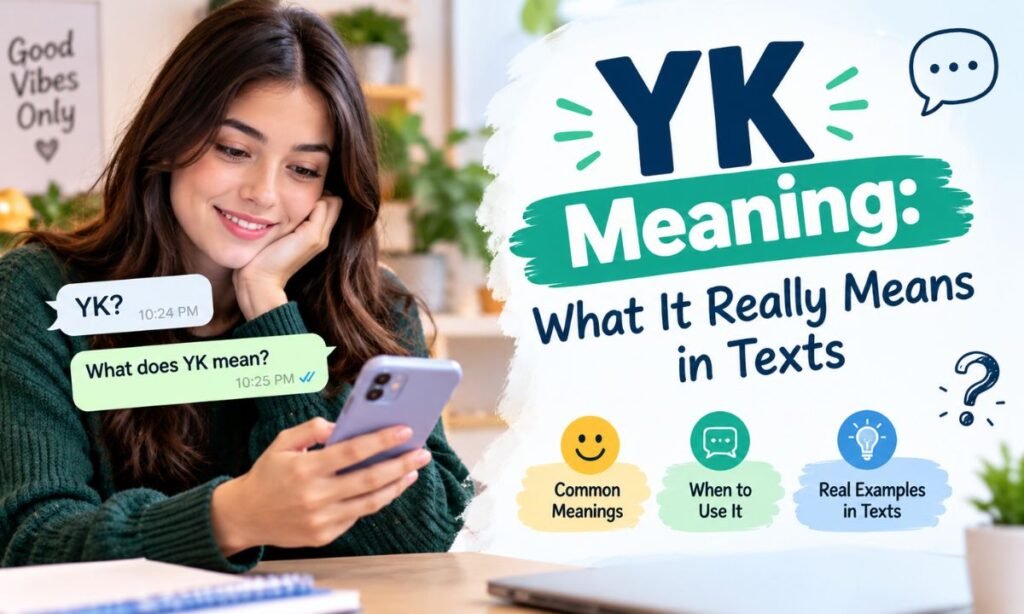

You open a chat and see a lone “yk” sitting at the end of a sentence, with nothing else attached. No punctuation, no explanation, just two letters. If you paused to figure out what your friend, coworker, or match on a dating app meant by it, you are far from alone. Short slang like this spreads through group chats and comment sections faster than most people can keep track of.
This guide breaks down where “yk” comes from, what it means on each major platform, how it differs from lookalikes like IYKYK and IDK, and when you should leave it out of a message entirely. By the end, you will be able to read it, use it, and reply to it without any guesswork.
What Does YK Mean?
In nearly every everyday context, “yk” is short for “you know.” People drop it into a sentence the same way they would nod while talking out loud, as a small verbal tic that signals shared understanding rather than new information. It rarely changes the meaning of a sentence; it just adds tone.
Because it is lowercase, quick to type, and easy to miss if you are not looking for it, “yk” often shows up at the start, middle, or end of a message without changing the grammar around it.
Simple Examples
- “That song hits different at night, yk?”
- “yk I don’t really do mornings”
- “It was a weird day, yk what I mean”
Primary Meaning
The core, dictionary-adjacent meaning of “yk” is simply “you know.” It is used the way people use filler phrases in spoken conversation, to soften a statement, invite agreement, or suggest that the listener already understands the context without needing it spelled out.
This is the meaning you should assume first unless something in the conversation clearly points elsewhere. Slang dictionaries and messaging guides consistently list “you know” as the standard reading.
Secondary Meanings
A smaller number of situations give “yk” a different job. In some group chats or fandom spaces, people use it as a warm, less common stand-in for “young king,” typically as a term of affection between friends. On rare occasions, especially in older slang lists, “yk” has also been used to mean “you’re kidding,” though this usage has mostly faded in favor of “yk” as “you know.”
Context is what separates these readings. A message that reads “yk, right?” after a shared memory is almost certainly “you know.” A message replying to shocking news with just “yk??” might lean toward disbelief, though even that case is uncommon today.
Background and Origin of YK
“You know” has been part of spoken English for generations, long before texting existed. What changed is the medium. As SMS, instant messengers, and early chat rooms took over casual conversation in the 2000s, people began compressing common phrases into letters to save time and keystrokes.
“Yk” grew out of that same wave that gave us “brb,” “idk,” and “lol.” It did not arrive with a single viral moment; it built up gradually across forums, texting apps, and eventually social platforms like Snapchat and Instagram, becoming a normal part of casual digital shorthand rather than a trend tied to one event.
Why It Became Popular
Several practical habits pushed “yk” into everyday use rather than any one deliberate push from a brand or influencer.
Fast Messaging Culture
Texting rewards speed. When a thought needs to move quickly between two phones, shaving “you know” down to two letters keeps the rhythm of a conversation close to how people actually talk out loud.
Character Limits
Older platforms and even some modern captions still nudge people toward shorter phrasing. Saving three letters here and there adds up when someone is fitting a thought into a caption, bio, or single text bubble.
Social Media Trends
Captions, comments, and quote-tweets favor short, punchy phrasing. “Yk” fits neatly into that style, letting people add a knowing, relatable tone without lengthening a post.
Gen Z Communication Style
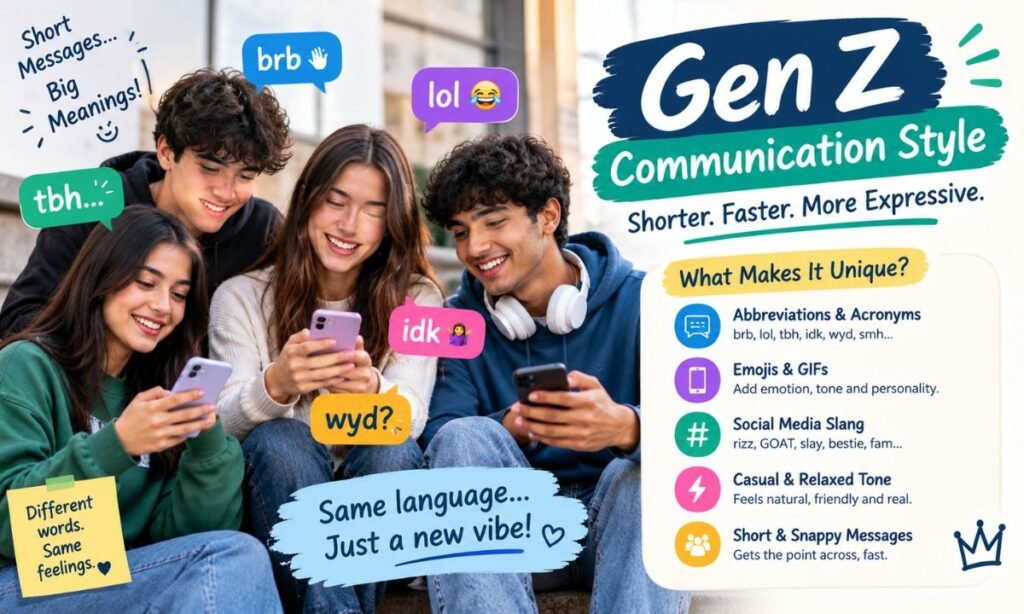
Younger internet users tend to favor abbreviations that mimic natural speech patterns over full, formal sentences. “Yk” reads as casual and familiar, which matches how many younger users prefer to sound online.
How YK Is Used in Different Contexts
The letters stay the same everywhere, but the emotional weight behind “yk” shifts depending on where you see it and who sent it.
In Casual Texting
Between friends or family, “yk” usually softens a statement or invites quiet agreement. It works almost like a comma with feeling attached, letting the sender pause without sounding blunt.
Examples
- “I just needed a break today, yk”
- “yk how it is with exams coming up”
- “Not mad, just tired, yk?”
In Social Media Captions
On captions, “yk” often adds a relatable, slightly vulnerable tone. It signals that the poster expects at least some of their audience to relate without needing further explanation.
Examples
- “Some days just hit harder, yk”
- “New season, new mood, yk?”
In Gaming Chats
During matches, players lean on short forms to communicate fast without breaking focus. “Yk” often references a shared strategy or callback to something that already happened in the match.
Examples
- “Push now, yk the plan”
- “That angle again, yk it works”
In Professional Settings
This is where “yk” mostly disappears. Work emails, client messages, and formal reports call for complete phrases like “you know” or, more often, no filler phrase at all. Using texting slang in a professional document can read as careless rather than casual.
YK Meaning Across Different Platforms
The meaning of “yk” stays consistent across apps, but tone and typical usage shift slightly depending on the platform’s culture.
| Platform | Typical Tone | Common Placement |
|---|---|---|
| Personal, conversational | Mid-message or end | |
| Relatable, caption-style | Captions and comments | |
| TikTok | Playful, expressive | Comments and captions |
| Snapchat | Casual, quick check-ins | End of short messages |
On WhatsApp, “yk” tends to show up in one-on-one chats between people who already know each other well. It softens statements about mood, plans, or small updates during the day.
Common Examples
- “Running late, yk traffic today”
- “Feeling better now, yk”
On Instagram, “yk” appears often in captions and comment replies, adding a knowing, low-key tone to a photo or story update.
Example
- “This view though, yk 🌅”
TikTok
TikTok comments and captions use “yk” to add emphasis or a relatable beat to a short clip, especially on videos about everyday frustrations or funny moments.
Example
- “POV: it’s Monday again, yk the feeling”
Snapchat
Snapchat conversations are short by design, so “yk” fits naturally at the end of quick check-ins between friends.
Examples
- “Home now, yk just tired”
- “Miss that place, yk”
Other Meanings of YK in Different Fields
Outside texting, “yk” is not a single, universally recognized abbreviation. Its meaning depends heavily on the specific organization or document using it.
Technical or Engineering Use
Some technical manuals or internal company documents use “yk” as a project-specific shorthand or model code, but there is no single, standardized engineering definition tied to the letters themselves.
Aviation
Within aviation, “YK” has historically appeared as part of airline or station codes in specific systems, such as a former airline code once used by Cyprus Turkish Airlines. It is not, however, a general aviation term with one fixed meaning, so any aviation use should be confirmed against official documentation rather than assumed.
Medical Context
“YK” is not a standard, universally recognized medical abbreviation. A clinic or hospital might use it internally as shorthand, but healthcare professionals generally avoid unclear two-letter abbreviations precisely because they can be misread.
Business or Product Names
Some companies and products use “YK” simply as an initialism tied to a founder’s name, brand, or internal product code. These cases are specific to that business and unrelated to the texting meaning.
Common Misconceptions and Mistakes
A few habits trip people up when they first encounter “yk” outside a casual chat.
Mistake #1: Thinking It Always Means “You’re Kidding”
While older slang lists included this meaning, it is now a minor, largely outdated reading. Defaulting to “you know” will be correct far more often.
Mistake #2: Using It in Formal Writing
Emails to a boss, cover letters, and school assignments call for full words. Slipping “yk” into formal writing tends to read as unpolished rather than casual and friendly.
Mistake #3: Overusing It
Dropping “yk” into every other sentence weakens its effect and can make a message harder to read. A little goes further than a lot: “I was tired, yk, and the movie ran long, yk, so I left early” reads as cluttered rather than natural.
Similar Terms and Alternatives
A handful of related abbreviations get confused with “yk” because they share letters or a similar casual tone.
| Term | Meaning | Typical Use |
|---|---|---|
| YK | You know | Casual emphasis or agreement |
| IDK | I don’t know | Expressing uncertainty |
| IKR | I know, right | Agreeing enthusiastically |
| YKK | You know what | Introducing a thought |
| IYKYK | If you know, you know | Referencing an inside joke |
How to Respond to YK
Replying to “yk” usually just means matching the tone rather than answering a literal question. A short, relaxed reply keeps the conversation flowing.
Easy Reply Examples
Example 1
Them: “That movie hit different, yk” You: “Fr, yk exactly what you mean”
Example 2
Them: “Just needed today off, yk” You: “Totally get it”
Example 3
Them: “This song is everything rn, yk” You: “Same, on repeat all day”
Example 4
Them: “Not in the mood today, yk” You: “No worries, take your time”
Difference Between YK and Similar Slang
Several abbreviations look similar at a glance but carry distinct meanings once you break them down.
YK vs IYKYK
1. YK
“Yk” stands for “you know” and works as a filler phrase inside a sentence, adding tone rather than hiding information.
2. IYKYK
“Iykyk” stands for “if you know, you know” and is typically used as a standalone tag, often after a caption, to flag an inside joke or reference that only some readers will understand.
Example
“Grandma’s cookies every Christmas, iykyk” points to a shared memory the poster is not explaining. “That was a long day, yk” simply softens a statement everyone can already follow.
YK vs IDK
“Yk” signals shared understanding or agreement, while “idk” signals the opposite: genuine uncertainty. Mixing them up flips the meaning of a sentence entirely, since one assumes the reader already gets it and the other admits the sender does not know something.
YK in Online Conversations and Dating Apps
On dating apps, shorthand like “yk” helps messages feel less like an interview and more like an ongoing conversation. It softens questions, adds a flirty or relaxed undertone, and invites the other person to read between the lines a little.
Examples on Dating Apps
- “Not really a first-date-at-a-restaurant person, yk?”
- “Been a long week, yk, but this convo’s a nice break”
Popularity and Trends Over Time
“Yk” grew alongside texting culture rather than arriving through one viral post. Early forms of chat shorthand like “u,” “r,” and “brb” set the pattern in the 2000s, and phrases like “yk” followed as messaging moved to phones and then to social captions.
Why It Remains Popular
- It mirrors how people already talk out loud, so it feels natural rather than forced.
- It takes almost no effort to type, which matters in fast-moving group chats.
- It works across nearly every platform without needing translation or explanation.
Frequently Asked Questions
What does YK mean in texting?
“Yk” almost always means “you know,” used to add emphasis or assume shared understanding in a casual message.
What does YK mean on Snapchat?
On Snapchat, “yk” carries the same “you know” meaning, usually placed at the end of a quick, casual message.
Is YK rude?
No. It is informal slang, not a rude or aggressive term, and its tone depends more on the surrounding message than the abbreviation itself.
What does YK mean from a girl or guy?
The meaning does not change based on gender; “yk” means “you know” regardless of who sends it.
Is YK professional?
No, it is best kept out of formal emails, cover letters, and workplace documents, where the full phrase or no filler at all reads better.
What is the difference between YK and IYKYK?
“Yk” softens a sentence and means “you know,” while “iykyk” stands alone to flag an inside joke or reference as “if you know, you know.”
Can older adults use YK?
Yes, anyone can use it, though it remains more common among younger, especially Gen Z, internet users.
Conclusion
“Yk” is a small piece of shorthand with an outsized presence in everyday digital conversation. In the vast majority of cases, it simply means “you know,” used to add warmth, agreement, or a relaxed tone to a message. The exceptions are rare enough that you can default to that meaning with confidence, while saving the fuller phrase for emails, schoolwork, or anything meant to read as formal. Once you know the difference between “yk,” “iykyk,” and “idk,” reading modern text conversations gets a lot easier.